Wildfire Preparedness · Monterey County
Monterey County's New Zone 0 Defensible Space Rules: What Homeowners Need to Know
New and stricter requirements for the five feet closest to your home are coming for properties in High and Very High Fire Hazard Severity Zones. Here's what's changing, the target timeline for full compliance, and why it may affect your home insurance too.
California is finalizing a new "Zone 0" ember-resistant zone rule covering the first 5 feet around your home. In Monterey County, new construction will need to meet Zone 0 standards before occupancy, and existing homes will get a three-year phase-in once the state regulation is adopted. Based on current state and county timelines, the practical target for full compliance is 2027. Getting ahead of it now can also help with your home insurance.
If you own, or are buying, a home on the Peninsula in a fire hazard zone, this is worth understanding well before it becomes mandatory. Check your address and firezone rating here.
What Exactly Is "Zone 0"?
Defensible space around a home has always been divided into zones, and Zone 0 is the newest and most important addition. According to the Monterey County Regional Fire Protection District (MCRFD), Zone 0 refers to the first five feet of space extending out from your home's walls or an attached deck. Download Checklist
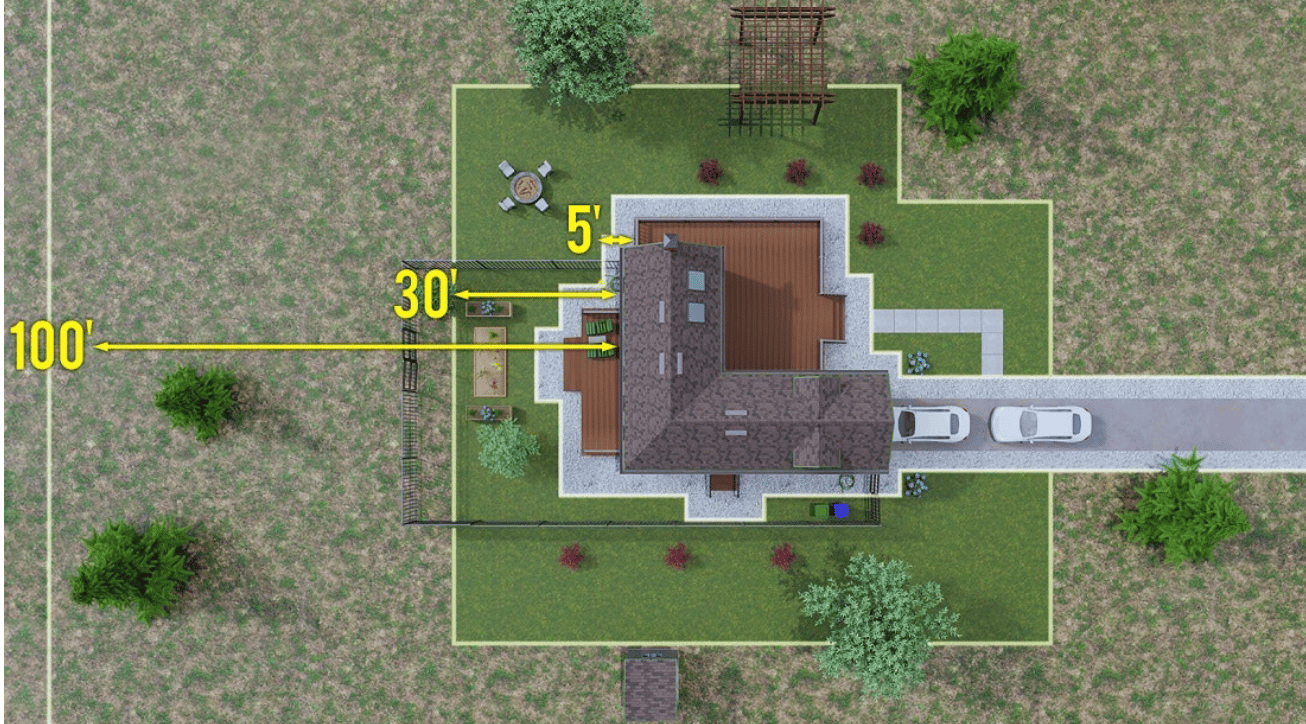
This area used to be treated as part of the broader Zone 1, but fire science from the last decade of California wildfires has shown it deserves its own, stricter standard. As MCRFD puts it, this is the area of a home "most vulnerable to ignition from embers, smoldering fires, and a continuation of fuels, such as fences or gates" that regularly cause the structure itself to catch fire.
Why Zone 0 Compliance Matters So Much
Zone 1 and Zone 2 clearance (5 to 100 feet out) has been required under California Public Resources Code 4291 for years. Zone 0 is different because it targets the single most common failure point: the gap between "the yard is clear" and "the house itself is protected." A wood fence touching the house, mulch against the foundation, or patio furniture piled against a wall can turn a survivable ember storm into a structure fire, even when the rest of the property is well maintained.
That is why fire officials describe the first five feet as the most important five feet on the entire property.
The Compliance Timeline
Zone 0 comes from Assembly Bill 3074, signed in 2020, which directed the state Board of Forestry and Fire Protection to write the actual regulation. That rulemaking has taken longer than originally planned, and the exact statewide enforcement date has moved more than once. Here is where things stand:
Now
MCRFD is actively educating property owners and encouraging a head start before the requirement becomes enforceable. This is the ideal window to get ahead of the work.
Upon Adoption
Once the Board of Forestry finalizes the update to PRC 4291, new construction in High and Very High Fire Hazard Severity Zones will be required to meet Zone 0 standards prior to occupancy.
Three-Year Phase-In
Existing homes will have a three-year window to come into compliance once the regulation takes effect, per MCRFD.
Target: 2027
Based on current state guidance and comparable timelines already adopted by other California jurisdictions, full compliance for existing homes in High and Very High zones is generally being targeted for 2027. Treat this as the planning goal, not a locked-in date, since the state regulation is still being finalized.
What Zone 0 Compliance Actually Requires
MCRFD's guidance breaks the work into concrete, achievable steps. None of this requires ripping out your entire landscape, but it does mean rethinking what touches your house directly.
- 1Use hardscape, gravel, pavers, or concrete, within 5 feet of the home. No combustible bark or mulch.
- 2Remove all dead and dying plants, weeds, and debris from your roof, gutters, deck, porch, stairways, and underneath the home.
- 3Remove all branches within 10 feet of any chimney or stovepipe outlet.
- 4Limit combustible items, like outdoor furniture and planters, on top of decks.
- 5Relocate firewood and lumber out of Zone 0 and into Zone 2.
- 6Replace combustible fencing, gates, and arbors attached to the home with noncombustible alternatives.
- 7Relocate garbage and recycling containers, boats, RVs, and vehicles outside this zone where possible.
For the full detail, MCRFD has published a Zone 0 Frequently Asked Questions document and a Zone 0 Working Group presentation with additional detail and visuals.
Why This Matters for Your Home Insurance
This isn't only a fire safety question. California's Department of Insurance has built defensible space, including the Zone 0 standard specifically, directly into how insurers are required to evaluate wildfire risk.
Under the state's Safer from Wildfires framework, insurance companies, including the CA FAIR Plan, are required to offer premium credits for specific mitigation actions. Maintaining a 5-foot ember-resistant zone around the home, essentially Zone 0, is one of the named qualifying actions, alongside items like a Class-A fire rated roof, ember-resistant vents, and enclosed eaves.
Discount Category | What Qualifies |
|---|---|
Immediate Surroundings | Vegetation, debris, and combustible materials cleared within 5 feet of the dwelling and under decks |
Structure | Class-A roof, enclosed eaves, ember-resistant vents, upgraded windows or shutters |
Community | Located in a designated Fire Risk Reduction Community or Firewise USA site |
Full Completion | An additional discount when all qualifying criteria are met together |
Combined, these discounts can meaningfully reduce a wildfire-zone premium, and just as importantly, they can factor into whether a carrier is willing to write or renew a policy on the property at all in the first place. Insurability, not just premium cost, is becoming the bigger issue for many owners in high fire hazard zones.
What This Means If You're Buying or Selling
For sellers, a home that already meets Zone 0 standards is a genuine selling point in a market where buyers are increasingly asking about fire hazard zone status and insurability before they ask about paint color. For buyers, it's worth checking a property's Fire Hazard Severity Zone designation and current defensible space condition as part of due diligence, not an afterthought after close of escrow.
Either way, the three-year phase-in for existing homes means this is not an urgent fire drill today, but it is a real cost and project to plan for, and starting early gives you the most flexibility on timing and budget.
Helpful Resources
- Zone 0 InformationMonterey County Regional Fire Protection District
- Zone 0 Frequently Asked Questions (PDF)MCRFD
- Check Your Fire Hazard Severity ZoneMCRFD
- Defensible Space Zones 0, 1 & 2CAL FIRE
- Safer from Wildfires Insurance DiscountsCalifornia Department of Insurance
Buying, selling, or preparing your home?
Whether you need a read on a property's fire hazard zone status before you make an offer, or want to talk through how defensible space upgrades affect value and insurability, I'm happy to help you think it through.